What Antique Sculptures Teach Us About Posture, Beauty, and the Forgotten Language of the Human Body
There is something remarkable about antique figurines and sculptures. They may come from entirely different cultures, continents, and historical periods, yet they often share something that is becoming increasingly difficult to find in our modern world: the art of graceful movement.
Looking at my collection, I find myself returning to this observation again and again.
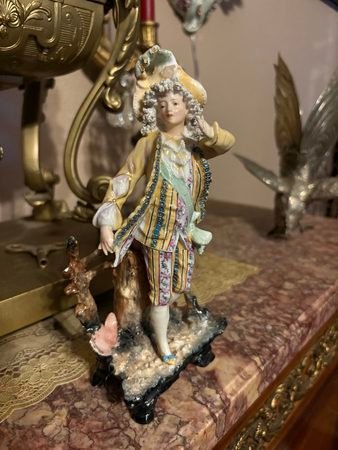
Here stands an eighteenth-century European gentleman, dressed in an elaborate costume, his hand raised delicately toward his face. Nearby, a porcelain couple sits together in a romantic scene, their bodies arranged with effortless elegance. A ballerina, inspired by The Sleeping Beauty, stretches one arm toward the sky, her entire figure expressing movement even while standing perfectly still.
Across the room are Chinese porcelain ladies, their flowing garments and carefully positioned hands suggesting refinement and quiet dignity. A serene Guanyin figure rests among lotus flowers, while another Buddhist figure stands peacefully adorned with strands of pearls.
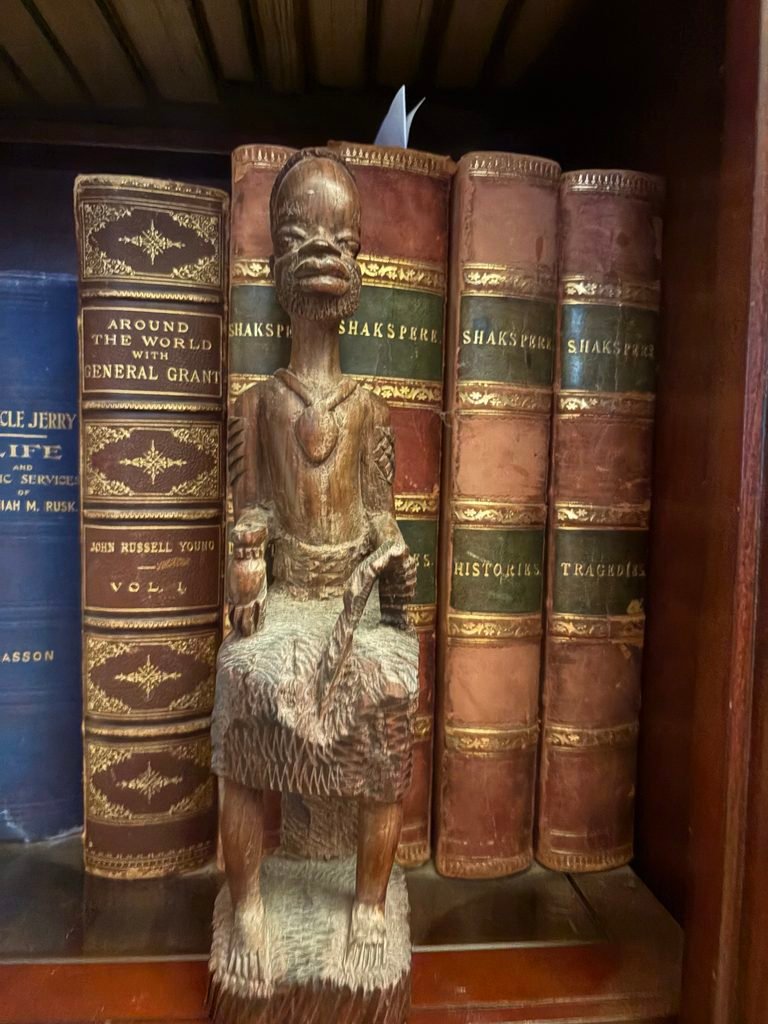
Then there is a carved wooden figure from Africa, representing a seated man of authority. His cultural tradition is entirely different from those of European porcelain or Chinese sculpture, yet his upright bearing communicates a similar sense of presence and dignity.
These objects were created by different artists, for different purposes, in different parts of the world.
And yet, they seem to speak a common language.
It is the language of posture, gesture, balance, and grace.
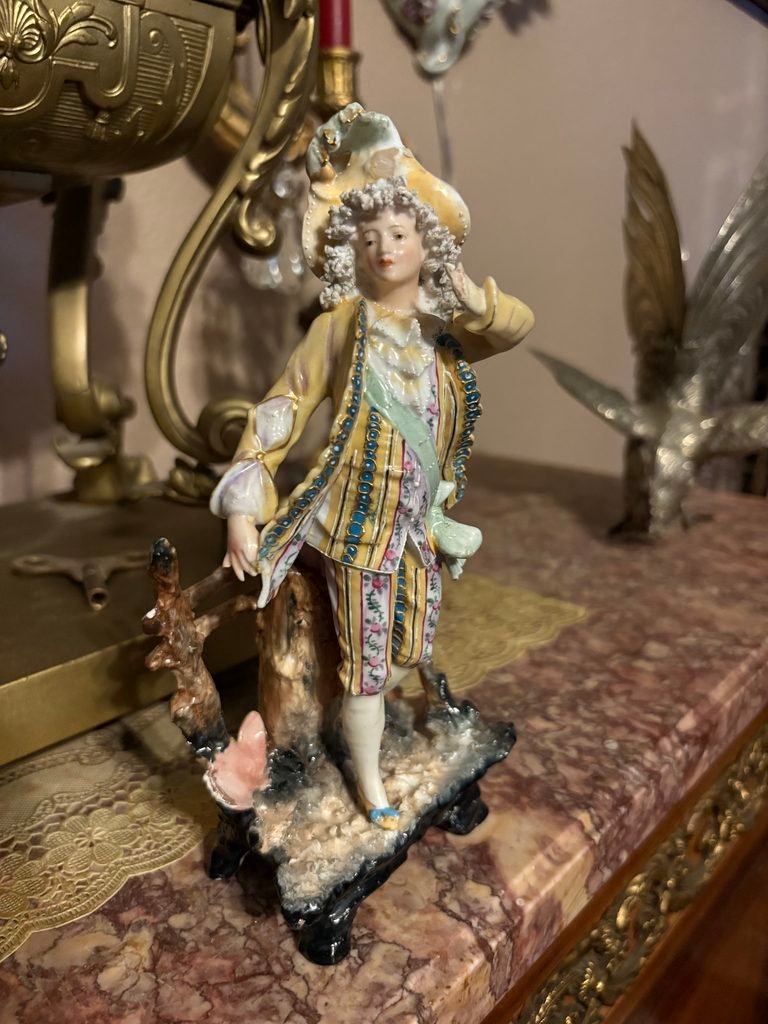
*European porcelain gentleman in eighteenth-century-style dress. The carefully arranged posture and expressive gesture reflect the artistic ideal of courtly elegance.*
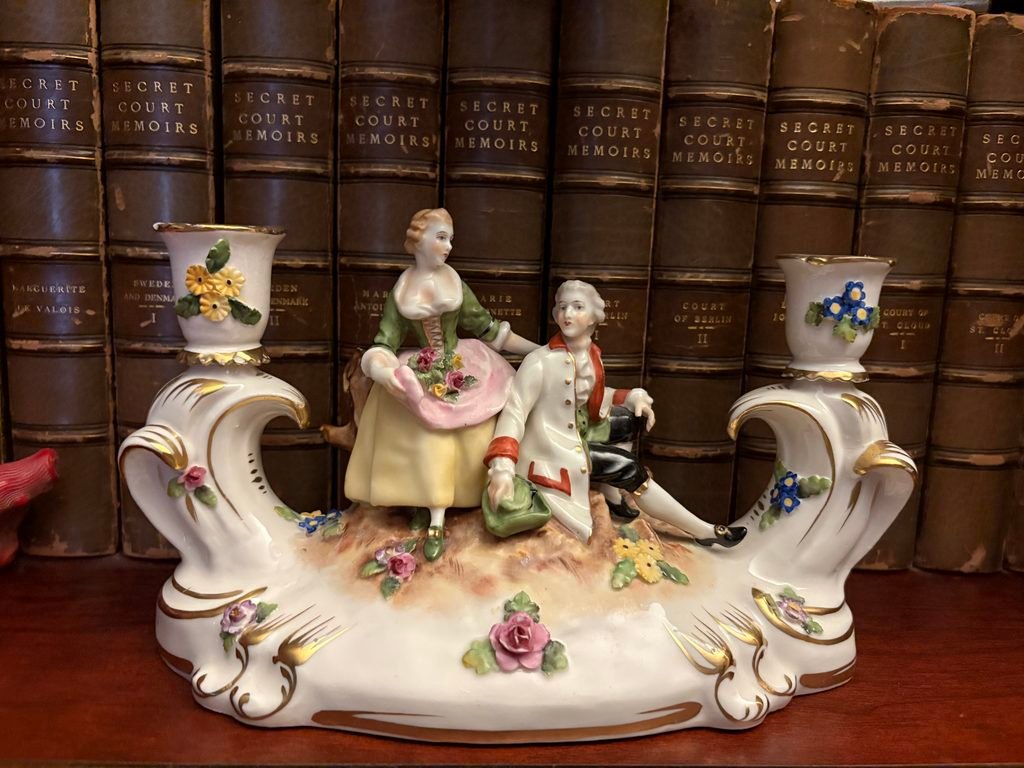
European porcelain composition depicting an elegantly dressed lady and gentleman in eighteenth-century-style attire. Their carefully arranged postures, delicate hand gestures, and graceful interaction reflect the ideals of courtship, refinement, and social elegance celebrated in European decorative arts.
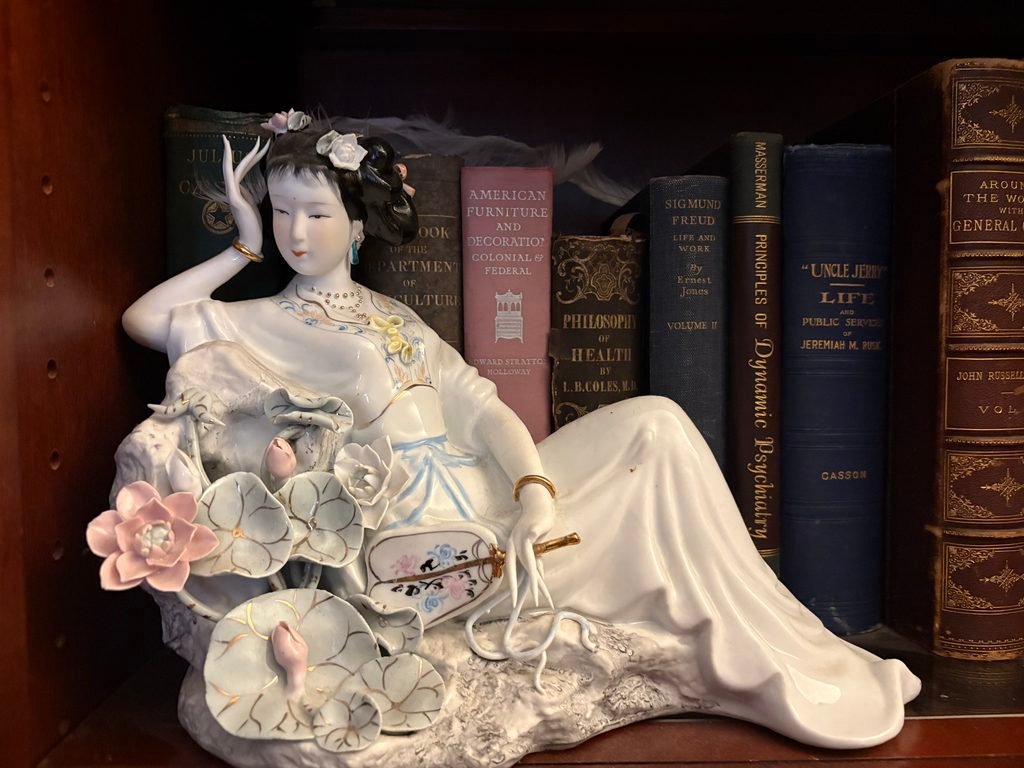
Chinese porcelain figure of a reclining lady, likely dating to the twentieth century. Her delicately raised hand, elegantly extended fingers, and flowing garments embody an ideal of feminine grace and composure. The sculptural arrangement suggests that beauty resides not only in appearance, but also in the quiet language of posture and gesture. Even in stillness, the figure conveys a sense of movement, refinement, and serenity.
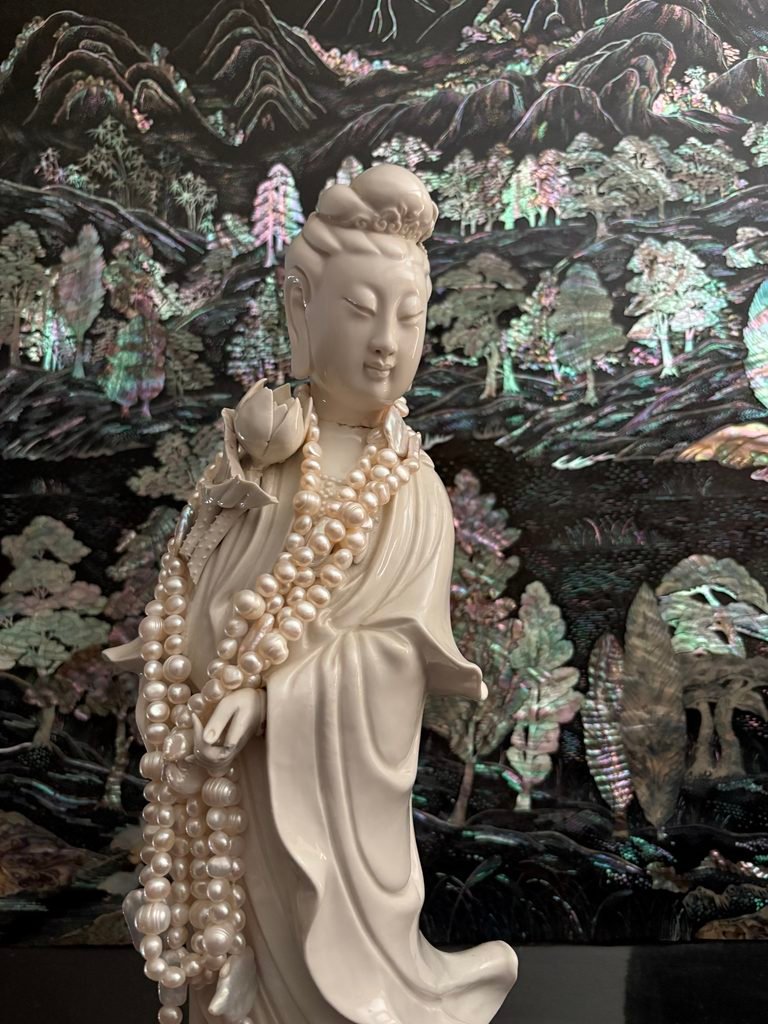
Guanyin (Quan Yin), the bodhisattva of compassion in East Asian Buddhist tradition, represented in a gracefully flowing robe. The gentle positioning of the hands, softly cascading folds of fabric, and tranquil presence express a different interpretation of elegance—one rooted not in courtly manners, but in compassion, harmony, and inner peace. The sculpture reminds us that graceful movement can be an expression of spiritual beauty as much as physical refinement.
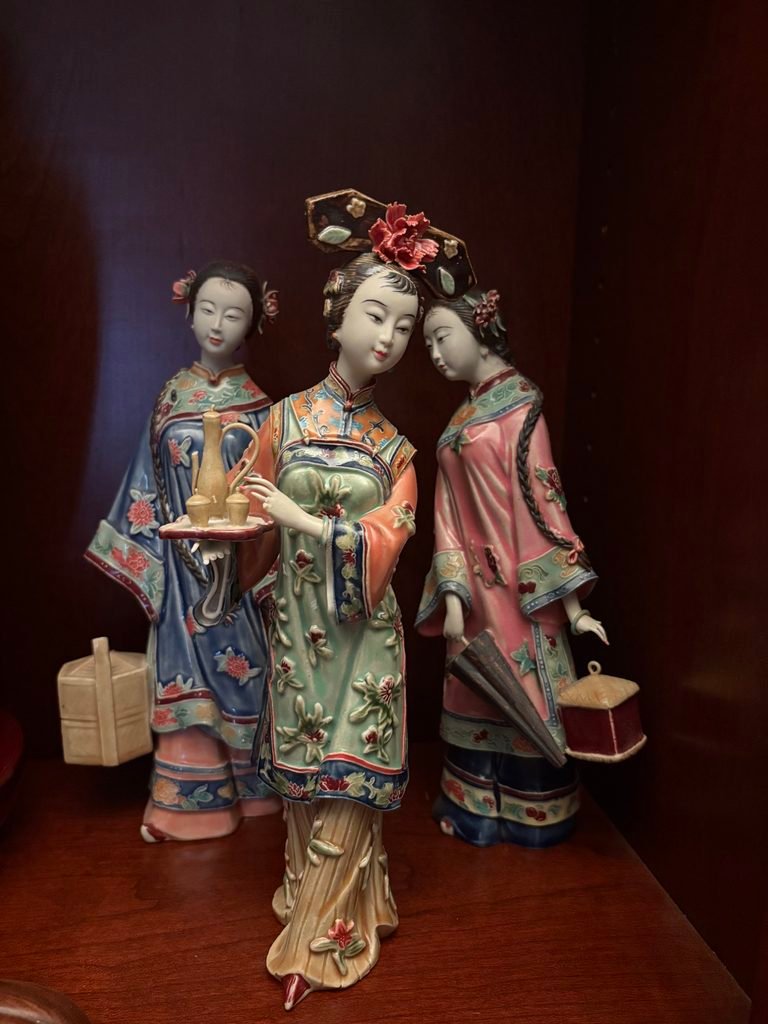
Three Chinese decorative figurines in richly ornamented traditional-style garments, likely dating to the twentieth century. Their elaborate floral patterns, flowing sleeves, carefully arranged hands, and distinctive postures illustrate the importance of gesture and presentation in Chinese figurative art. Each figure conveys a different sense of character and activity, while their graceful silhouettes transform ordinary human movements into expressions of beauty, refinement, and cultural tradition. Together, they remind us that elegance is not confined to a single civilization, but finds its own artistic expression across cultures.
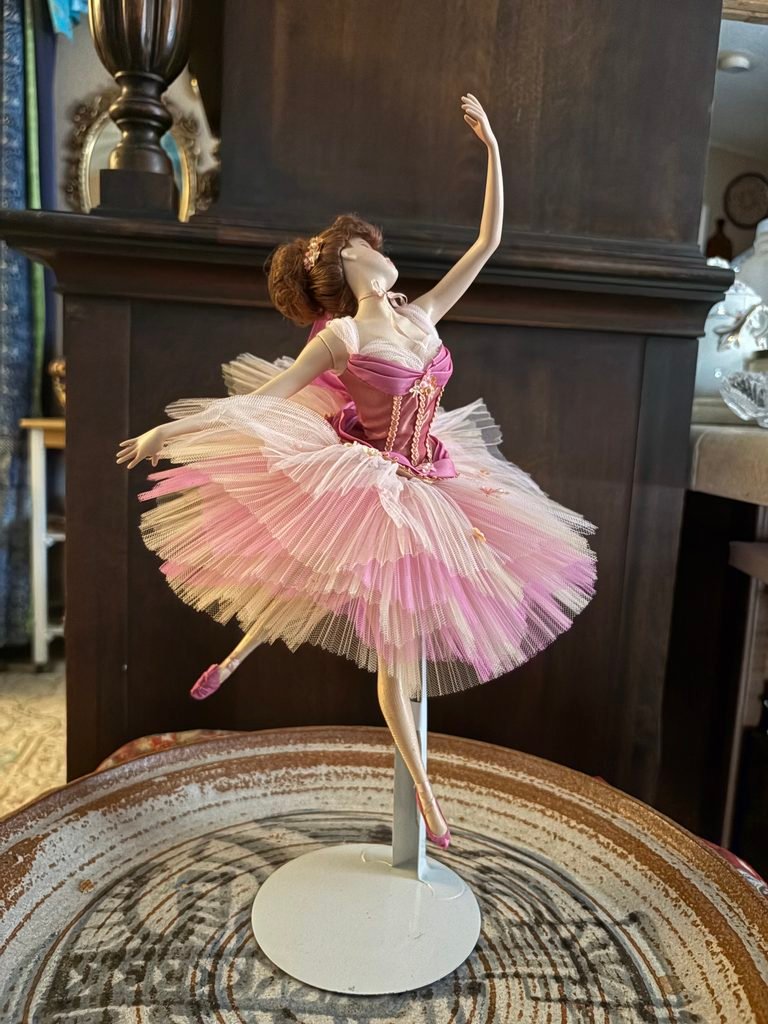
Sleeping Beauty, a collectible ballerina figure inspired by the elegance of classical ballet. Her delicately extended leg, pointed toes, and flowing pink tutu capture the discipline, balance, and refinement of the dancer’s art. Unlike the stillness of traditional porcelain figures, the ballerina suggests movement suspended in time. Her graceful pose connects centuries of artistic ideals, reminding us that elegance continues to find expression through dance, decorative art, and the enduring beauty of the human form.
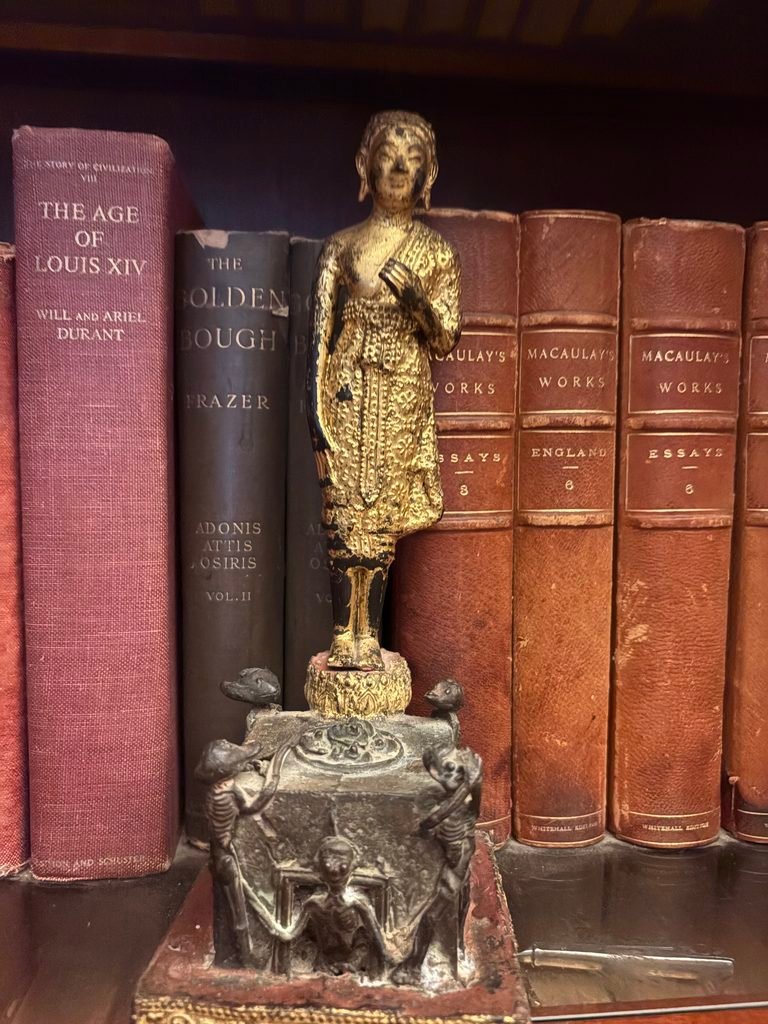
Gilded standing figure of uncertain origin, wearing an elaborately ornamented garment and displaying a carefully composed hand gesture. The upright posture and restrained movement create an impression of dignity, contemplation, and ceremonial grace. Unlike the theatrical elegance of European porcelain or the flowing silhouettes of Chinese figurines, this sculpture communicates refinement through stillness, symmetry, and the expressive positioning of the hands.
Gilded standing figure of uncertain origin, wearing an elaborately ornamented garment and displaying a carefully composed hand gesture. The upright posture and restrained movement create an impression of dignity, contemplation, and ceremonial grace. Unlike the theatrical elegance of European porcelain or the flowing silhouettes of Chinese figurines, this sculpture communicates refinement through stillness, symmetry, and the expressive positioning of the hands.
The Beauty We Risk Forgetting
Across centuries and civilizations, artists have understood something that modern life increasingly overlooks: grace is not merely a quality of appearance, but a language of the human body.
In European porcelain, we discover the refinement of courtly manners, the elegance of a carefully extended hand, and the subtle communication between two figures. In Chinese decorative art, we encounter flowing garments, delicate gestures, and the quiet harmony of the human form. In spiritual sculpture, stillness becomes an expression of contemplation and inner peace. Even in the familiar image of a ballerina, we recognize the discipline and beauty required to transform movement into art.
These objects come from different traditions, yet they share a remarkable understanding: the way we carry ourselves, move our hands, sit, stand, and interact with others can communicate as much as words.
Today, our movements are often hurried, distracted, and shaped by convenience. We rarely consider the elegance of an ordinary gesture or the quiet dignity of a composed posture. What earlier generations cultivated through dance, ceremony, etiquette, and artistic expression can seem increasingly distant from contemporary life.
Yet grace has not disappeared. It remains visible in the objects that previous generations created and treasured. Each sculpture preserves a moment of human expression, inviting us to observe what we might otherwise overlook.
Perhaps the true value of collecting antiques and decorative art lies not simply in preserving beautiful objects, but in preserving the ideas, sensibilities, and ways of living they represent.
Grace cannot be purchased, inherited, or imitated through appearance alone. It is cultivated through awareness, restraint, consideration for others, and an appreciation of beauty in everyday life.
And perhaps, by studying the graceful figures of the past, we may rediscover something worth bringing into the present.
From The Karga Collection — where objects preserve stories, and beauty connects generations.
The Lost Art of Graceful Movement — Part II
What Have We Forgotten?
An exploration of dance, education, cultural traditions, and the disappearing art of everyday elegance.
In the first part of this series, we explored how artists across different cultures captured grace through porcelain, sculpture, and decorative objects. From European courtly figures to Chinese porcelain ladies and the serene image of Guanyin, each artwork revealed a different understanding of beauty through posture and gesture.
But these objects also raise a larger question: Why did earlier societies devote so much attention to the cultivation of graceful movement, and why does this seem less important in modern everyday life?
To explore this question, we must travel back to the court of Louis XIV, where dance was not merely entertainment, but an essential part of education.
The Court of the Sun King: When Dance Was an Education
The Court of the Sun King: When Dance Was an Education
One of the most fascinating examples of movement as a cultivated art comes from seventeenth-century France, during the reign of Louis XIV, famously known as the Sun King.
Louis XIV was not merely a monarch who appreciated music and dance. He was himself an accomplished dancer.
As a young king, he performed in elaborate court ballets, including the famous Ballet de la Nuit in 1653, in which he appeared as the rising sun. His association with this imagery became an enduring part of his royal identity.
At the French court, dancing was much more than entertainment.
It was an essential social skill, particularly for members of the aristocracy. A gentleman was expected to understand not only military affairs, etiquette, and the responsibilities of his position, but also how to move with precision, balance, and elegance.
The ability to dance demonstrated discipline and refinement. Every bow, every turn, every carefully positioned foot communicated something about the person performing it.
Louis XIV helped transform ballet from a courtly pastime into an increasingly formalized art. In 1661, he established the Académie Royale de Danse, an important institution in the development of classical ballet.
Among the musicians associated with his court was the remarkable composer Jean-Baptiste Lully, whose music became inseparable from the theatrical and dancing traditions of the period.
For those interested in this fascinating chapter of European cultural history, I recommend the French film Le Roi danse (The King Is Dancing, 2000), which explores the relationship between Louis XIV, Lully, and the arts at the royal court. Documentaries about the history of ballet also provide a wonderful introduction to the influence of the Sun King’s reign.
What interests me most is not simply the magnificence of Versailles or the extravagance of its royal entertainments.
It is the idea that the ability to move beautifully was once considered an essential part of a person’s education.
Grace was practiced, corrected, refined, and eventually incorporated into everyday behavior.
And this tradition was not limited to France.
Grace Across Cultures
When I look at my Chinese porcelain figures, I recognize a different artistic tradition, yet one that also places extraordinary importance on bodily expression.
In many East Asian traditions, gesture, posture, and the relationship between stillness and movement carry deep cultural and sometimes spiritual significance.
A slight inclination of the head, the position of a hand, or the arrangement of flowing robes can communicate qualities that words cannot easily express.
Consider the serene image of Guanyin, the bodhisattva associated with compassion in East Asian Buddhism.
The figure does not need an elaborate dramatic gesture to command attention. Its quiet presence, gentle expression, and composed posture convey tranquility.
The beauty is not in physical effort, but in the apparent absence of effort.
This is a different kind of grace from the theatrical elegance of European court ballet.
Yet both traditions recognize that the human body can communicate something beyond its physical appearance.
The same observation can be made when looking at traditional African sculpture.
My carved wooden figure of a seated man, possibly representing a person of authority, is especially interesting in this regard. His posture is upright, his position composed, and his presence unmistakable.
Without knowing the sculpture’s precise cultural origin, I would hesitate to assign it a specific ceremonial or social meaning. African artistic traditions are extraordinarily diverse, and each deserves to be understood within its own historical context.
Nevertheless, the figure reminds me that dignity can be expressed through posture without requiring elaborate clothing, jewelry, or ornamentation.
Sometimes the simplest gesture carries the greatest authority.
Three Chinese Ladies: The Beauty That Survives Imperfection
Among my favorite pieces in the collection are three Chinese figurines depicting elegantly dressed women.
Their clothing is richly decorated, their hairstyles carefully arranged, and their faces delicately modeled.
One carries a tray with a tea service. Another holds a fan. Their bodies turn gently, and their hands appear to participate in a quiet conversation.
What makes these three ladies particularly meaningful to me is that none of them is perfect.
All three have suffered some damage over the years.
A collector concerned exclusively with flawless condition might consider these imperfections unfortunate. And certainly, condition matters when evaluating antiques.
But I find myself appreciating these ladies even more because of what they have survived.
Their delicate porcelain has endured years of handling, movement, and the unpredictable circumstances of human life.
Some details may have been lost, yet something essential remains untouched.
Their dignity. Their elegance. Their grace.
The artists who created them managed to capture something that even physical damage cannot easily erase.
The women still stand beautifully. Their gestures remain gentle. Their expressions preserve an atmosphere of refinement.
To me, they demonstrate that beauty does not always depend upon perfection.
Sometimes beauty is found in the persistence of character despite imperfection.
Perhaps this is one of the most important lessons antiques can teach us.
We spend so much of modern life attempting to preserve youth, eliminate flaws, and achieve an ideal appearance.
Yet here are three imperfect porcelain ladies, still capable of communicating extraordinary beauty through the simple language of posture and gesture.
What Have We Lost in the Name of Freedom?
Modern society has changed dramatically in its expectations regarding posture, etiquette, and physical presentation.
Many of these changes have been necessary and beneficial.
We have questioned rigid social hierarchies, challenged restrictive expectations, and gained greater freedom to express our individuality.
I would not suggest returning to a world in which a person’s worth was measured by aristocratic manners or adherence to inflexible rules.
However, I sometimes wonder whether, in rejecting certain traditions, we have also discarded something valuable.
Look around an ordinary public space today.
You may see people walking with their heads lowered toward their phones, shoulders rounded, backs bent, and attention directed almost entirely toward a small screen.
People sit collapsed into chairs, sometimes for hours, barely noticing how their bodies are positioned.
Of course, there are practical explanations for this. Modern work frequently involves computers, prolonged sitting, and repetitive movements. Fatigue, pain, disability, and individual physical differences also influence posture. No single posture defines a person’s character or worth.
Nevertheless, there is a cultural question worth asking.
When did we stop considering the way we move as something worthy of attention and cultivation?
We still recognize graceful movement when we see it.
We admire ballet dancers, figure skaters, gymnasts, and performers whose bodies seem to move with extraordinary harmony.
We are captivated by the elegant movements of certain actors in historical films.
We recognize the beauty of a person who walks with quiet confidence, stands comfortably upright, or makes a simple gesture with effortless refinement.
Yet outside the performing arts, we rarely consider grace something that ordinary people should learn.
It has become a specialized accomplishment rather than an everyday aspiration.
And perhaps that is our loss.
Grace Is Not the Same as Rigidity
There is an important distinction between graceful posture and forced posture.
Grace does not mean holding the body in an uncomfortable position or attempting to imitate an aristocratic portrait.
It does not require expensive clothing, perfect physical proportions, or adherence to an artificial standard of beauty.
True grace is not stiffness.
It is a relationship between balance, awareness, ease, and intention.
A graceful person does not necessarily move slowly. Grace can be found in energetic movement, spontaneous laughter, or even a simple act of reaching for an object.
What matters is the sense of harmony between the movement and the person making it.
This is something we can cultivate without attending a royal dancing academy.
We can become more conscious of how we sit.
We can notice the position of our shoulders.
We can walk without constantly looking down.
We can learn to make gestures without unnecessary tension.
We can pay attention to the way we greet another person, offer an object, or enter a room.
These are small things, but small things are often the foundation of beauty.
The Silent Lessons of Antique Art
I have always believed that antiques are more than decorative objects.
They are witnesses to the lives, values, and aspirations of people who came before us.
A porcelain figurine may appear to be a simple ornament, but it also preserves an artist’s understanding of beauty.
The gentleman in his eighteenth-century costume reminds us of a time when refined movement was closely associated with education and social life.
The European porcelain couple preserves an ideal of romantic elegance.
The ballerina captures the extraordinary discipline required to make difficult movement appear effortless.
The Chinese ladies express grace through delicate gestures and composed expressions.
The Buddhist figures communicate serenity through stillness.
The African wooden sculpture offers another interpretation of bodily presence and dignity.
Their meanings are not identical, nor should we pretend that every culture shares precisely the same understanding of beauty.
Yet together, these objects invite us to consider a remarkable possibility:
That across many different human traditions, artists have recognized posture and movement as powerful expressions of inner life.
And perhaps that is why these figures continue to appeal to us.
We do not collect them merely because they are old.
We collect them because they preserve something we still recognize as beautiful.
A Final Reflection
The next time you visit an antique shop, a museum, or perhaps simply look at a porcelain figure displayed in your home, take a moment to observe its posture.
Look at the shoulders.
Notice the position of the hands.
Follow the movement of the body, the placement of the feet, and the gentle turn of the head.
Ask yourself why an artist, perhaps two hundred years ago or more, chose to represent the human figure in precisely that way.
Then consider something else.
How often do we pay the same attention to our own movements?
Perhaps the lost art of graceful movement is not truly lost.
Perhaps it has simply been forgotten in the rush of modern life.
And perhaps we do not need to return to the courts of Versailles, the formal traditions of another century, or the strict instructions of our grandmothers to rediscover it.
We only need to remember that the human body is capable of expressing more than physical function.
It can express harmony.
It can express dignity.
It can express beauty.
And sometimes, the most graceful thing we can do is simply become aware of how we carry ourselves through the world.
Thank you for reading.
Karga Antiques
Objects with History. Stories Worth Preserving.